If you spend any amount of time driving through Camarillo—rolling along the 101 between Pleasant Valley fields and the foothills, or detouring through Old Town on a bright afternoon—you know the sun here has a particular intensity. It is not just the warmth on your arm through the glass or the familiar glare at the wheel; it is the lingering fade on your upholstery, the cracking of a dashboard that used to look new, the fatigue that creeps in during a long, hazy commute. That is why drivers across Ventura County turn to a trusted window tinting service to manage UV exposure and cabin heat without compromising clarity or style. As a local who has watched Camarillo evolve—from the strawberry fields to the expanding neighborhoods of Mission Oaks—I can say with confidence that a good auto tint is one of the smartest upgrades you can make for both comfort and preservation.
Our sun exposure is unique because Camarillo sits at a meeting point: the cool marine layer drifting in from the Pacific and the warm, dry air that pours over the grade from the Santa Rosa Valley. On days when the breeze is gentle, the city bathes in generous light that makes the orchard rows glow. On days when the Santa Anas pick up, heat settles quickly into a parked car, and even a short errand at the Outlets can turn the interior into a small oven. In both conditions, UV rays are relentless. They do not just cause glare; they penetrate standard auto glass, aging leather, drying plastics, and putting your skin at risk. Once you learn how effective modern films are at blocking those rays, it becomes hard to ignore the protection you are missing.
What surprises many motorists is how advanced tint technology has become. There was a time when the choice felt binary: go dark and deal with signal interference, or go light and accept marginal heat relief. Today, high-performance films—especially non-metallic, ceramic-based options—are engineered to reject a high percentage of infrared heat while allowing visible light to pass with amazing clarity. That means you feel cooler as soon as the vehicle stabilizes in the sun, not because you are sitting in a cave, but because the spectrum responsible for heat build-up is being filtered before it can saturate the cabin. The result is practical, daily comfort that you notice behind the wheel and in the way your air conditioning does not have to work as hard to keep pace with July afternoons.
Why UV and Heat Matter So Much in Camarillo
The landmarks of local life tell the story. A morning run for produce along Santa Rosa Road, a soccer practice at the Mission Oaks fields, a drive out toward the Camarillo Springs area for a weekend hike—our vehicles are constantly transitioning between motion and rest under direct light. UV-A rays, which make up the majority of UV radiation, penetrate glass readily and are a leading cause of fabric fading and interior degradation. UV-B rays are shorter and more energetic; while automotive glass blocks a greater share of UV-B, it is seldom enough to eliminate exposure altogether. Over time, the cumulative effect becomes visible: steerings wheel finishes wear unevenly, headliners discolor, and seats crack in the patterns dictated by sun angles.
Heat compounds the problem. The greenhouse effect inside a vehicle is more intense than many realize because solar energy enters through clear glass, is absorbed by darker surfaces, and is then re-radiated as longer-wave heat that cannot escape efficiently. After even a quick grocery stop in Camarillo when the sky is crystal clear, a dark dash can reach temperatures that accelerate off-gassing of plastics and adhesives. A quality tint interrupts this cycle by rejecting a large portion of infrared energy before it enters, translating to lower surface temperatures, slower material aging, and a cabin that feels composed rather than suffocating.
The Science Behind Modern Films
Technically, heat rejection is less about visible darkness and more about spectral selectivity. Films use thin, multi-layer constructions that target specific wavelengths responsible for heat gain and UV damage. Ceramic films, in particular, incorporate nanoparticle technology that disrupts infrared transmission without relying on metallic content. That is important in the age of connected vehicles. Metallic films can occasionally impede radio, GPS, cellular, and toll transponder signals. Ceramic films sidestep that issue while keeping optical clarity crisp, so road signs, cyclists, and distant brake lights remain sharp even at dusk when contrast matters most.
UV protection ratings on modern films can approach 99 percent in the UVA and UVB ranges, and while numbers can blur together on spec sheets, the user experience is straightforward: you feel less radiant heat on your forearm, you notice less eye strain with reflective glare diminished, and your interior continues to look like itself month after month. For drivers who commute along the 101 corridor or spend time idling in school pickup lines near Las Posas, that adds up to real relief day in and day out.
California Tint Laws and Everyday Visibility
Living in California means tint choices come with legal nuances. The front side windows are required to maintain most of their original light transmission, with allowance for clear UV-blocking films that do not significantly darken appearance. The windshield is limited to a narrow band at the top—often called the eyebrow—that cuts glare without obstructing the driver’s view. Rear side windows and the back glass have more flexibility in darkness, allowing you to tailor privacy and heat mitigation to your preferences. A seasoned installer will walk you through what combinations satisfy state law while achieving your goals. The goal is a balanced outcome: legal, comfortable, and aesthetically aligned with your car’s lines.
Visibility is a practical matter, too, because Camarillo’s microclimate gives us foggy mornings from marine layers that sometimes linger along Lewis Road and Ponderosa Drive. You want a film that preserves contrast when visibility is less than perfect and that does not distort nighttime streetlights on Adolfo Road. High-quality films are tested for low haze and high clarity, ensuring the light you do see is clean and stable. That makes early morning departures to the commuter lot or late returns from Ventura safer and less stressful on your eyes.
Choosing the Right Shade and Film for Your Drive
Style is part of the conversation, and there is no denying that the right shade can make a vehicle look composed and intentional. That said, shade should follow function. Think about where you park at home—exposed driveway in Village at the Park or shaded carport near Arneill Road—how long your commute is, and whether passengers like kids or pets spend time in back seats. If you have a child’s car seat installed, a slightly deeper shade on rear windows can make naps on the way back from the Outlets far more comfortable, while you keep the fronts within legal and visibility-friendly limits.
This is also where the knowledge of a local technician becomes valuable. We drive the same roads you do, and we know how the sun arcs across our valley at different times of year. A recommendation for a ceramic film with a moderate visible light transmission might sound generic, but when it is based on Camarillo’s actual conditions—our quick transitions from overcast to blazing—it results in a more consistent daily experience. It is worth taking a short consultation rather than picking a shade from a chart in a vacuum. Somewhere in this process is a moment when a well-timed suggestion makes everything click, and that moment often comes from a conversation rather than a spec sheet.
As you evaluate film families, remember that the best results come not only from the material but from how it is installed. Cleanliness, precision, and patience create a finish that looks native to the vehicle. Edges sit tight to the seals, defroster lines remain intact on back glass, and there are no contamination points trapped beneath the adhesive. The middle of your decision journey is a great time to circle back to a trusted window tinting service and ask to see examples on actual cars, ideally in outdoor light. Seeing a similar vehicle in person tells you more than any brochure could.
What a Careful Installation Looks Like
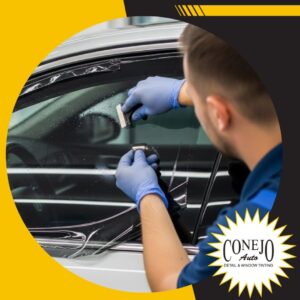
The shop environment matters. A well-lit, clean bay with filtered air lets installers lay film without chasing dust. Prepping glass thoroughly is where much of the magic happens; the washing, clay barring when appropriate, and careful squeegeeing of edges ensure adhesives bond to a pristine surface. Heat forming the film to complex curves—think of the compound shapes on modern hatchbacks—demands experience and the right tools. When done correctly, the film relaxes into place, contouring smoothly and drying evenly with minimal edge lift. After installation, a film needs some curing time depending on weather; in Camarillo’s mild climate, films usually set comfortably, though a cool morning fog can extend curing slightly. Patience during this period pays dividends in appearance and longevity.
Customers often ask about the tiny specks or faint haziness they may notice in the first days after install. It is normal for residual moisture to create a soft, clouded look that dissipates as water evaporates through the film. Reputable shops explain this before you leave, note expected timelines, and schedule follow-ups if you want a second set of eyes. The goal is not just to finish the job but to make you feel confident about the process, from first wash to long-term care.
Living With Tint: Care and Durability
Good films are designed to last for years when treated well. Avoid ammonia-based cleaners, as they can attack the film’s protective layers, and stick with soft microfiber towels that will not scratch. Rolling windows up for the first few days prevents the edges from catching while the adhesive settles. After that, tinted windows integrate into your routine so seamlessly that you only notice them when stepping into an untinted car on a hot day and feeling the old rush of heat and light. In Camarillo’s relatively gentle climate—less extreme than inland summers—the lifespan of quality films is especially favorable, which means this is an investment you will feel every time you drive for a long while.
Performance Myths and Real-World Expectations
There is a lingering myth that only the darkest tint blocks heat effectively. In reality, a well-engineered light to medium ceramic film can outperform a very dark, basic dyed film by a significant margin. Darkness contributes to privacy and glare reduction, but solar heat rejection is rooted in the film’s composition. Another misconception is that tint will inevitably bubble or purple over time. Those failures are associated with lower-grade films and rushed installs. With contemporary ceramics and careful technique, color stability and optical integrity hold up year after year. When you consider how often you are stopped at a light on Daily Drive with the sun crawling across your left shoulder, those cumulative minutes make performance and stability worth prioritizing.
Local Driving Scenarios Where Tint Shines
Think of late afternoons when the sun angles low over Camarillo Ranch and the 101 westbound lanes are striped with glare. Tint dampens that oblique light, softening the sharp edge that fatigues your eyes. Picture parking next to the playing fields at Bob Kildee Community Park; a shaded back seat keeps snacks from melting and leather from searing. On weekend coastal runs toward Point Mugu, the transition from chilly, fog-diffused mornings to bright blue skies can be dramatic. A balanced tint keeps your interior environment consistent, so your focus stays on the road’s sweep and the ocean beyond. Small changes add up to a calmer, safer drive, not because tint is flashy, but because it simply makes sense for how we live here.
Environmental and Energy Considerations
While vehicles are not buildings, the principle remains: reducing solar heat gain lowers the load on climate control systems. A cooler cabin requires less aggressive AC settings, which can modestly improve efficiency over time. There is also a material sustainability angle. By shielding interiors from UV degradation, you extend the useful life of seats, dashboards, and trims, reducing the need for replacements and the waste that comes with them. For drivers who care about stewardship of our valley’s beauty—its oaks, its fields, the coastal air that drifts in at dusk—small, practical steps like this matter, even when they begin as a comfort decision.
Working With a Local Expert
There is a particular satisfaction in choosing a shop that understands our city’s rhythms, from school traffic timing to the way afternoon winds push dust across certain corridors. A local team knows how films respond in our weather, which shades look natural against the palette of Camarillo’s surroundings, and how to tune recommendations to your specific routes. They can show you cars like yours, answer questions candidly, and be there if you ever want to adjust something down the line. Those relationships make ownership easier, and they tend to produce results that feel tailored rather than generic.
Ultimately, auto window tinting in Camarillo is about living better with the sun that defines our days. It is about arriving at the Camarillo Premium Outlets and stepping out of a cabin that feels composed, not stifling. It is about preserving the clean lines and textures of your interior so your vehicle ages gracefully. And it is about the steady comfort of knowing that the light you welcome is the light you choose, with the harshness filtered away.
How Long Does Installation Take?
Most standard sedans can be completed in a few hours, while larger vehicles with more complex windows may take longer, especially if the rear glass has pronounced curves or if old film needs removal. The time investment includes careful cleaning and shaping, so while it may be tempting to rush, giving the process proper time leads to a cleaner, longer-lasting outcome. Plan for a same-day pickup, and expect the shop to provide clear aftercare instructions before you drive away.
Will Tint Affect My Visibility at Night?
With the right film, nighttime visibility remains crisp. Modern ceramic films are designed for low haze, preserving contrast for streetlights and signage. Staying within reasonable shades on front windows, especially given California’s regulations, ensures you can navigate dim residential streets near Ponderosa or Mission Oaks comfortably. If you are particularly sensitive to low-light conditions, ask your installer to demonstrate different shades under evening lighting so you can feel the difference before deciding.
Does Window Tint Really Block UV Rays?
High-quality automotive films block up to 99 percent of UVA and UVB rays, which are primary contributors to interior fading and skin exposure. You may not see UV rays, but you can track their impact over time—the difference between a faded seat bolster and one that retains its color, the clarity of your dash, and the way you feel after a long drive in bright conditions. Adding that layer of protection is like giving your car and your skin an invisible shield.
Is Darker Always Better for Heat?
No. Heat rejection is driven by the film’s composition, especially its ability to reject infrared energy. A medium-shade ceramic film often outperforms a very dark dyed film in real heat reduction. Choosing a film based on performance specifications and in-person viewing will give you a better outcome than simply selecting the darkest legal shade. Your installer can show you examples on vehicles parked outside, where the difference is most obvious.
Will Film Interfere With My Electronics?
Ceramic, non-metallic films are designed to avoid the signal interference sometimes associated with metallic films. Your cellular reception, GPS, and toll transponders should continue to function normally. If you have a specific device in the vehicle that you are concerned about, bring it with you to the consultation and test it in a car with the film installed so you can make a confident decision.
How Do I Care for Tinted Windows?
Care is simple: allow the film to cure fully before rolling down windows, use non-ammonia glass cleaners, and wipe with soft microfiber towels. Avoid abrasive tools or blades that could scratch the protective layer. If you notice a corner lifting, contact your installer promptly, as early attention can prevent debris from intruding and preserve a flawless edge. Routine, gentle cleaning keeps the windows clear and the film looking original.
What If My Car Already Has Old Tint?
Old film can be removed safely, though it requires patience and the right tools to avoid damaging defroster lines or leaving adhesive residue. A professional will steam and lift the film in controlled passes, then thoroughly prep the glass before applying new material. Starting fresh ensures the new film performs as designed, without haze or contamination left behind by aging layers.
When you are ready to make your daily driving in Camarillo tangibly cooler, clearer, and more protected, connect with a trusted local team and schedule your visit. The right window tinting service will explain options, show you results on real vehicles, and deliver an installation that looks factory-perfect from day one. Step into a more comfortable car the next time the sun breaks over the hills—your eyes, your skin, and your interior will thank you.